

Cerabeta Barley Beta-Glucan
How to lower LDL cholesterol naturally
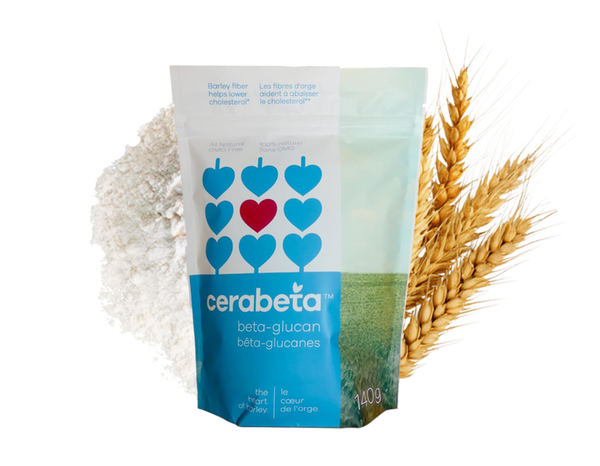
A diet lower in saturated fat, plus 3 g of barley beta-glucan a day, can lower LDL cholesterol, usually within 4 to 12 weeks. Three tablespoons of Cerabeta give you 3 g, the amount in the FDA-recognized health claim for barley, so plan on 12 weeks alongside your doctor's plan, then a retest.
LDL is the cholesterol that can build up in artery walls, which is why your doctor watches it.
Start with your diet pattern
The eating pattern that lowers LDL is well studied and simple to describe:
- Less saturated fat. Cut back on fatty cuts of meat, butter, cream, cheese and baked goods.
- Better fats in their place. Use olive or canola oil, and eat nuts, seeds, avocado and fish.
- More soluble fiber. Barley, beans, lentils, apples and citrus all add it.
- More plants. Vegetables, fruit and whole grains in place of refined starches and sweets.
- The rest of the plan. Regular activity, not smoking and less alcohol all help your numbers.
Soluble fiber is the step people most often miss, and it is where barley beta-glucan comes in.
How barley beta-glucan works
Beta-glucan is a soluble fiber found in barley. When it meets liquid in your gut, it forms a thick gel. That gel holds on to bile acids, which your liver makes from cholesterol, and carries them out of the body.
To make new bile acids, your liver pulls more LDL cholesterol out of your blood. Over several weeks, that shows up as a lower LDL number on your lipid panel.
Cerabeta is barley beta-glucan, concentrated from non-GMO barley in Camrose, Alberta, Canada. Our patented process uses air to do the separating, with no chemicals, enzymes or water.
How much: 3 g a day
The research and the regulators point at the same number: 3 g of barley beta-glucan a day. That is the amount in the FDA health claim, and 3 tablespoons of Cerabeta give you 3 g.
How long: plan for 12 weeks, then retest
The studies behind barley beta-glucan ran from 4 to 12 weeks. That matches what many doctors already do: a few months of diet and lifestyle changes, then a new lipid panel.
So plan on 12 weeks. Take Cerabeta every day, keep your eating pattern steady, and book your retest for the end of week 12. Bring your results to your doctor and decide on next steps together.
What to expect
You will not feel your LDL change. The lipid panel is the only way to know. Results vary with your starting LDL, your diet and your genetics.
In a meta-analysis of 8 trials, barley lowered LDL by about 10 mg/dL on average. Some clinical studies of barley beta-glucan have reported up to a 24% reduction in LDL cholesterol. To give it a fair test, take the full 3 tablespoons every day and keep the rest of your diet steady.
How to take it
Build up over three weeks, then stay at 3 tablespoons a day.
| Week | Daily amount | Barley beta-glucan |
|---|---|---|
| Week 1 | 1 tablespoon | About 1 g |
| Week 2 | 2 tablespoons | About 2 g |
| Week 3 onward | 3 tablespoons | 3 g |
- Mix it into what you already have. Water, coffee, a smoothie, yogurt or hot cereal all work.
- All at once or spread out. Take it at one meal or across the day. What matters is reaching 3 tablespoons every day.
- Drink water through the day, as you would with any fiber.
- Keep a 12-week supply on hand. A missed week means a later retest.
Who should talk to their doctor first
Talk to your doctor or pharmacist before you start if any of these apply:
- You take cholesterol medication or any other prescription. Keep taking it as prescribed. Cerabeta works alongside your doctor's plan, not in place of it. Cerabeta is a soluble fiber, so it can slow how quickly some medications are absorbed. Take it 1 to 2 hours apart from your medication, and check with your doctor or pharmacist if you're unsure.
- You have celiac disease or a severe gluten intolerance. Barley contains hordein, a protein in the gluten family, at about 80 ppm. Cerabeta is not suitable for you.
- You have a digestive condition such as IBS, or have had your gallbladder removed.
- You are pregnant or breastfeeding, or it is for someone under 18.
What the regulators say
FDA. The FDA recognizes a health claim for beta-glucan soluble fiber from barley: "Soluble fiber from foods such as [barley], as part of a diet low in saturated fat and cholesterol, may reduce the risk of heart disease." It is based on 3 g or more a day of beta-glucan soluble fiber from barley. Three tablespoons of Cerabeta give you 3 g (21 CFR 101.81).
Health Canada. Health Canada licenses barley beta-glucan natural health products to help reduce/lower LDL cholesterol (which is one risk factor for the development of coronary heart disease) at 2 to 10 g of beta-glucan a day. It has also accepted a claim for barley foods, "Barley fibre helps reduce/lower cholesterol," based on 3 g of barley beta-glucan a day (Health Canada claim assessment).
Europe (EFSA). The European Food Safety Authority's scientific panel concluded that barley beta-glucan helps maintain normal blood LDL cholesterol at 3 g a day (EFSA Journal 2011, 2207).
The research
- AbuMweis SS, Jew S, Ames NP (2010). Beta-glucan from barley and its lipid lowering capacity: a meta-analysis of randomized, controlled trials. European Journal of Clinical Nutrition. Across 11 trials, barley beta-glucan lowered LDL by 0.27 mmol/L (about 10 mg/dL). https://pubmed.ncbi.nlm.nih.gov/20924392/
- Talati R, Baker WL, Pabilonia MS, White CM, Coleman CI (2009). The effects of barley-derived soluble fiber on serum lipids. Annals of Family Medicine. Across 8 trials with 391 people lasting 4 to 12 weeks, barley lowered LDL by 10 mg/dL and total cholesterol by 13 mg/dL. https://pubmed.ncbi.nlm.nih.gov/19273871/
- Behall KM, Scholfield DJ, Hallfrisch J (2004). Diets containing barley significantly reduce lipids in mildly hypercholesterolemic men and women. American Journal of Clinical Nutrition. 25 adults ate 0, 3 or 6 g of barley beta-glucan a day for 5 weeks each; total cholesterol was significantly lower at 3 g and 6 g. https://pubmed.ncbi.nlm.nih.gov/15531664/
More studies: https://cerabeta.com/pages/research
Questions people ask
Can I take Cerabeta with a statin? Cerabeta is meant to work alongside your doctor's plan. Keep taking your statin as prescribed. Cerabeta is a soluble fiber, so it can slow how quickly some medications are absorbed. Take it 1 to 2 hours apart from your medication, and check with your doctor or pharmacist if you're unsure. Over time, some people who lower their LDL through diet and lifestyle changes are able to reduce or stop their statin with their doctor's approval. That decision is your doctor's to make: never stop or change a prescription on your own.
How soon will my LDL change? Studies ran 4 to 12 weeks. Plan on 12 weeks of daily use before your retest, so the result reflects the full amount.
Is 3 tablespoons right for everyone? It gives you 3 g of barley beta-glucan, the amount in the FDA health claim. Build up to it over three weeks. Your doctor can tell you if a different plan suits you.
Is Cerabeta gluten-free? No. Barley contains hordein, a protein in the gluten family. The amount is low (about 80 ppm), but Cerabeta is not suitable for anyone with celiac disease or a severe gluten intolerance.
Can I just eat more barley? You could, but it's harder than it sounds. To get 3 g of barley beta-glucan from food, you'd need about a cup and a half of cooked barley, every day of the week. Three tablespoons of Cerabeta gets you there in one step.
Next step
Start your 12 weeks. Subscribe and join the Success Program: a plan for your goal, the right amount every time, and email support from a real person.
This guide is for general education and is not medical advice. Talk to your doctor or pharmacist before changing your diet, medications or supplements.
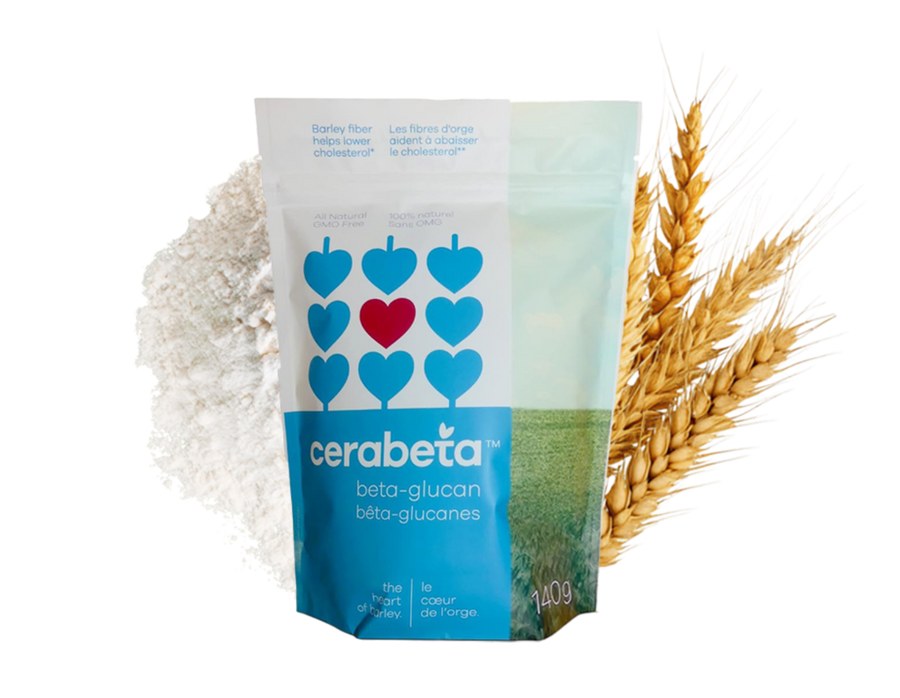
Ready to try Cerabeta?
- Barley beta-glucan from Canadian non-GMO barley
- No sugar, no sweeteners, no taste
- Mixes into coffee, oatmeal, yogurt or a smoothie
- Subscribe to join the Success Program: a plan for your goal, a welcome kit and email support
- About $1.64 a day on a two-bag subscription, with free shipping
One bag lasts about two weeks at 3 tablespoons a day.